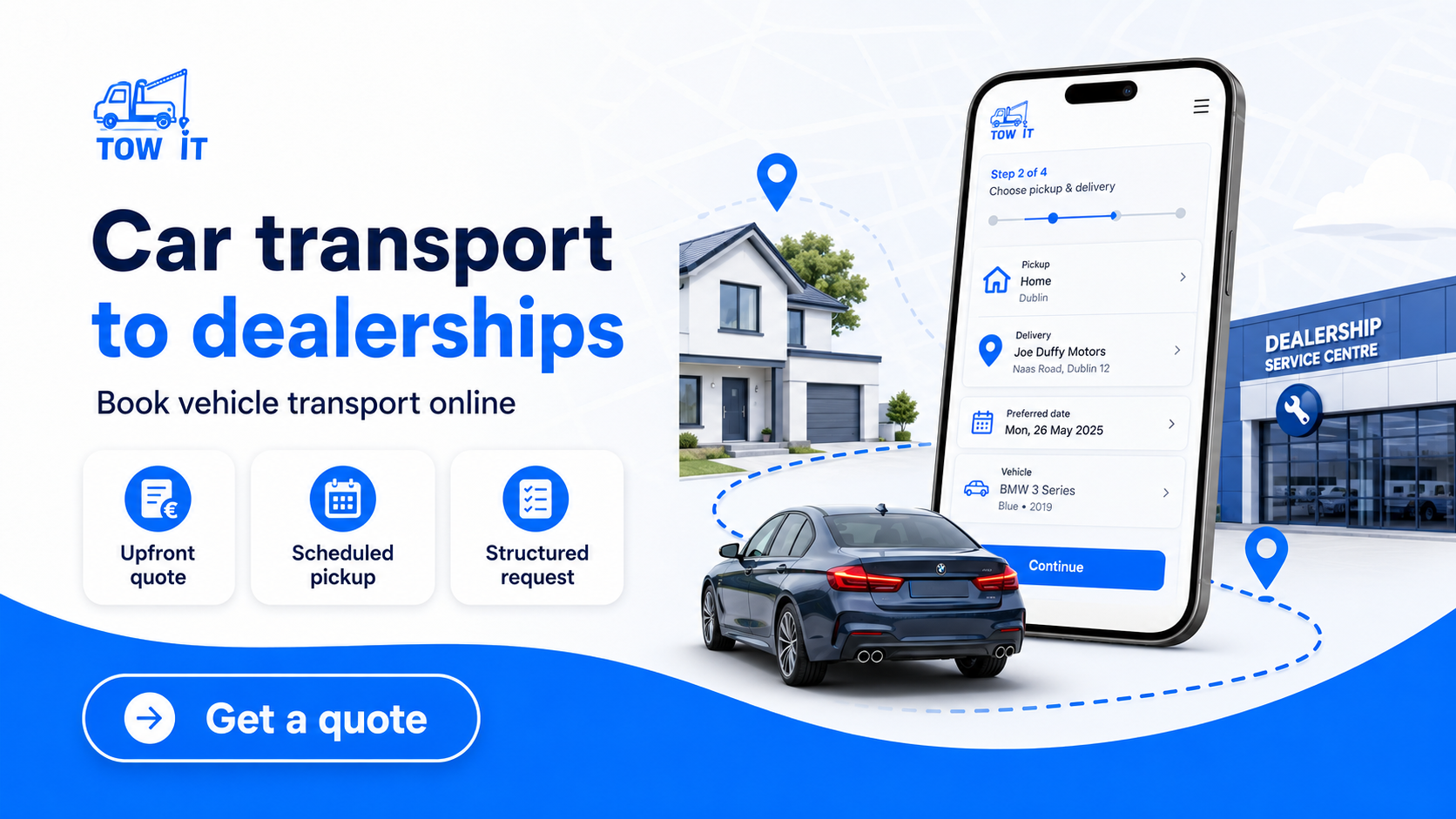
Planned vehicle movements, structured by Tow It
Tow It is built to handle more than urgent recovery. Scheduled jobs show how the platform can structure timing, pricing, assignment, and execution across drivers, providers, and businesses.
Not every vehicle movement is urgent. Some jobs need to happen now, but many movements are planned, scheduled, and easier to manage when the request starts with structure.
A driver may need a car moved to a dealership, garage, or service centre. A provider may want clearer scheduled work that can be planned around availability. A business may need to coordinate multiple vehicle movements with records, visibility, and repeatable workflows.
This is where Tow It becomes more than an on-demand towing request form.
Tow It is built to structure vehicle movement. That includes urgent recovery, but it also includes scheduled transport jobs: movements that can be booked in advance, priced clearly, assigned properly, and tracked through a consistent workflow.
This week, we are focusing on that capability.
Scheduled jobs are a different kind of vehicle movement
The vehicle movement industry is often associated with emergencies. A car breaks down, a driver needs help, and a recovery operator responds. That remains an important part of the market, and Tow It supports that use case.
But scheduled transport jobs create a different operational problem.
The issue is not only speed. The issue is coordination.
Without a structured system, these jobs often end up managed through phone calls, WhatsApp messages, screenshots, spreadsheets, and manual follow-ups.
That can work for one job. It becomes harder when volume increases.
Scheduled vehicle transport is a coordination problem.
The value of the platform is not only receiving the request. It is turning that movement into a clear, priced, assigned, and trackable workflow.
Tow It turns vehicle movements into structured requests
Tow It is designed around one core idea: vehicle movements should be requested, priced, assigned, and managed through a consistent operating flow.
That applies whether the request comes from a driver booking transport online, a provider managing incoming jobs, a dealership coordinating customer vehicles, or a future Hub account handling multiple movements at once.
The surface may change, but the operational logic remains the same.
That structure is the platform.
One capability, three audiences
Scheduled jobs matter because they show how the same Tow It infrastructure can create value for different parts of the vehicle movement market.
For drivers
Scheduled transport means less uncertainty. The driver can request a planned movement online, define the pickup and destination, and understand the quote before confirming.
For providers
Scheduled jobs create better operational control. Providers receive clearer job details, better context, and work that can be planned around availability.
For businesses
Scheduled transport becomes coordination infrastructure. Dealerships, garages, fleets, and other businesses can manage recurring vehicle movements with more structure.
For drivers: scheduled transport means less uncertainty
For drivers, scheduled vehicle transport is about clarity.
Not every driver needs roadside rescue. Sometimes the driver knows the car needs to be moved tomorrow, later this week, or at a specific time. The destination may be a dealership, a garage, a service centre, a repair shop, or another private location.
In that situation, the driver does not want a long back-and-forth conversation. They want to know whether they can book it, how much it will cost, whether they can choose a preferred time, and whether the request will be clear.
Tow It gives drivers a structured way to request that movement.
For providers: scheduled jobs create better operational control
For recovery operators and transport providers, scheduled jobs are valuable because they create more predictable work.
Emergency jobs are reactive. They appear suddenly, require fast decisions, and often interrupt the day. Scheduled jobs are different. They can be reviewed, accepted with more context, planned around availability, and used to fill gaps between urgent jobs.
Tow It helps providers receive clearer job details instead of vague messages.
A structured scheduled request gives the operator the information needed to decide whether the job makes sense: pickup, destination, vehicle, timing, price, and customer context.
For dealerships and businesses: scheduled transport becomes coordination infrastructure
Dealerships, garages, fleet operators, rental companies, and other businesses often need vehicles moved in a planned way.
This could include customer vehicles going to service, cars being moved between locations, vehicles going to or from inspection, trade-ins being collected, or fleet vehicles being repositioned.
For businesses, the problem is not just ordering one transport job. The problem is repeat coordination.
Tow It Hub is the enterprise layer designed for that type of coordination. The same operational engine that powers individual requests can support structured business workflows: planned jobs, batch logic, audit trails, and clearer movement history.
What we will cover this week
This week’s content will explore scheduled vehicle transport from three angles.
One platform, multiple audiences
The important point is that Tow It does not need separate systems for each audience.
Drivers need a simple booking experience. Providers need clear jobs and operational control. Businesses need coordination, visibility, and records.
Those needs are different, but they connect to the same core infrastructure.
Tow It is built around a shared engine for pricing, request creation, assignment, status updates, payments, execution history, and operational visibility.
That is why scheduled jobs matter strategically. They show how Tow It can move beyond reactive towing and become a structured vehicle movement platform.
Scheduled vehicle transport with Tow It
Tow It helps structure vehicle movements across Ireland.
Whether the job is urgent or scheduled, individual or business-related, the goal is the same: make the movement clear, priced, assigned, and trackable.
Scheduled jobs are an important part of that vision. They turn vehicle transport from a loose conversation into a structured workflow.
And that is the future Tow It is working toward.
Structured vehicle movement starts here
Tow It helps drivers, providers, and businesses move from informal coordination to structured vehicle transport workflows across Ireland.
→ Get a quoteTow It supports scheduled vehicle transport in Ireland by helping drivers, providers, and businesses structure planned vehicle movements with clear pricing, booking, assignment, and tracking.